Lives are being lost unnecessarily
We can change that – starting now
Our Campaign: Scaling Post-Crash Response
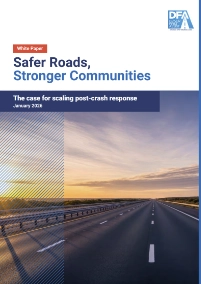
Drivers are entitled to the same emergency care afforded to workers in conventional settings. It’s time to level up. Our campaign explains how.
Download 'The Science' behind the campaign.

In many cases, the first person on scene is another driver. This campaign aims to close that gap by equipping drivers and organisations with the skills, confidence and understanding to act safely and effectively until emergency services arrive.


›The Road network needs a response too
But the road network – where millions work every day – does not benefit from the same structured response.
We can make the road network a safer place for drivers


Our campaign aims to:
- Raise awareness of the gap in post-crash response across the road network
- Support organisations to recognise their role in improving outcomes for drivers and other road users
- Encourage a shared, system-wide approach to early intervention at incidents
- Equip drivers with the skills, confidence and understanding to act safely and effectively
- Embed this commitment through adoption of the Driver First Assist Charter
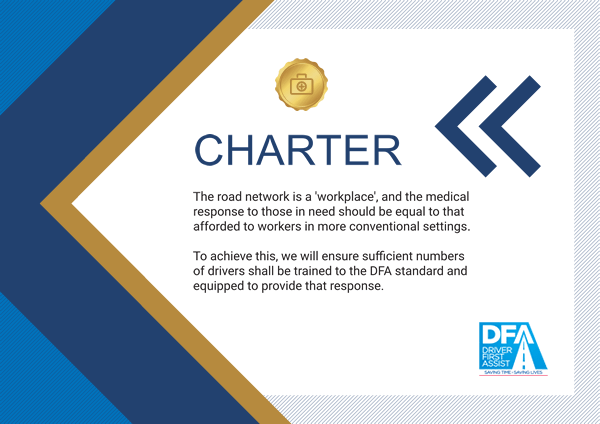
“We recognise the road network as a workplace, where the risks faced by drivers require an effective and timely response.
We are committed to improving post-crash outcomes by equipping a proportion of our drivers with the skills, knowledge and confidence to act safely and effectively at incident scenes.
In doing so, we will contribute to a wider, shared capability that supports emergency services and improves outcomes for all road users.”
Latest Articles
We Know What Saves Lives After a Crash – So Why Isn’t It Happening?
The moments after a crash don’t always go as they should. Injuries worsen. People die who might...

Why Employers and Drivers Hesitate to Act After a Collision
When serious road traffic collisions occur, the absence of early intervention is often attributed...

Post-Crash Response: Why the Minutes Before Emergency Services Arrive Matter
Why the first minutes after a collision are often overlooked For decades, road safety policy has...
WHAT THEY SAY
Our Clients
Business Partners