





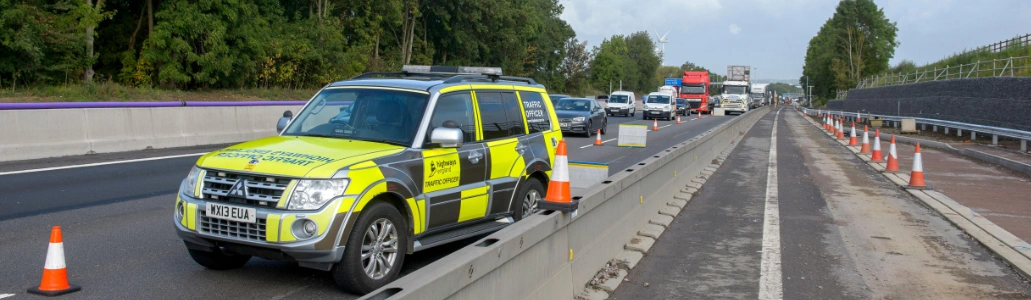
Why the first minutes after a collision are often overlooked
For decades, road safety policy has rightly focused on prevention. Safer vehicles, safer roads, safer speeds, and safer behaviours have all contributed to reducing harm. But when serious road traffic collisions do occur, outcomes are often shaped not by what happens later in hospital, but by what happens in the minutes before emergency services arrive.
Those minutes remain one of the least examined and least structured parts of the Safe System.
The gap between collision and professional care
In the immediate aftermath of a collision, the first people on scene are rarely emergency responders. They are drivers, passengers, and bystanders who must make rapid decisions about safety, communication, and sometimes care, often with little guidance or confidence.
Despite this reality, post-crash response is still widely treated as informal or taken for granted, rather than as a capability that can be developed and supported. The system relies heavily on good intentions, while underestimating the complexity of early decision-making under stress.
Why the early minutes matter
Research into trauma and emergency care consistently shows that early actions influence outcomes. Rapid hazard control, early recognition of serious injury or illness, timely intervention, and clear communication all contribute to survival and recovery. Crucially, these actions do not begin when blue lights arrive. They begin with whoever is already there.
The question is not whether people will be present at an incident, but whether they are prepared.
From assumption to structured capability
The DFA White Paper was developed to explore this overlooked gap: the space between collision and professional care, and the role that trained individuals can play within it.
Drawing on operational experience and research, the paper examines post-crash response as a structured layer of safety that complements prevention, enforcement, and emergency services by enabling those already at the scene to act as effective early responders in the critical minutes before help arrives.
Why post-crash response matters beyond road safety
While the immediate focus is on road traffic collisions, the implications extend further. Skills such as:
- Dynamic risk assessment
- Situational awareness
- Personal safety
- Early casualty care
They are not confined to the roadside. They apply equally to medical emergencies, workplace incidents, and public spaces.
In that sense, post-crash response training develops life-saving capability that travels with people – into work, communities, and everyday life.
Employers, drivers, and shared responsibility
For employers whose staff drive as part of their work, this raises important questions. Driving is already recognised as one of the most dangerous activities undertaken in the course of employment, yet many organisations stop short of addressing what happens when prevention fails.
The White Paper explores how structured incident management and post-crash response training can:
- Support health and safety compliance
- Reduce uncertainty and fear around intervention
- Improve confidence and decision-making
- Contribute to wider organisational resilience
These themes are explored in more depth in subsequent blogs.
A system, not a single intervention
The purpose of the White Paper is not to promote a standalone solution, but to invite a broader conversation about preparedness, capability, and responsibility.
Post-crash response sits at the intersection of road safety, workplace safety, public health, and community resilience. Strengthening it has the potential to deliver benefits across all of those domains.
This system-based perspective aligns with the Government’s recently published Road Safety Strategy, which recognises the importance of a whole-system approach to safety, including the role of early response alongside prevention and enforcement.
What follows
This blog marks the start of a short series exploring specific aspects of post-crash response, including:
- Why employers and drivers often hesitate to engage
- The broader benefits of incident management training
- Cardiac arrest, the importance of early intervention, and the use of automatic external defibrillators (AEDs)
- How preparedness aligns with emerging policy expectations
Each examines a different facet of the same question:
What happens before emergency services arrive — and how can that part of the system be strengthened?
This blog draws on themes explored in the DFA White Paper, which examines how a structured post-crash response can strengthen safety, resilience, and preparedness across society.
Read the White Paper:
Safer Roads: Stronger Communities www.driverfirstassist.org/whitepaper2026